
Munich Solar Technology
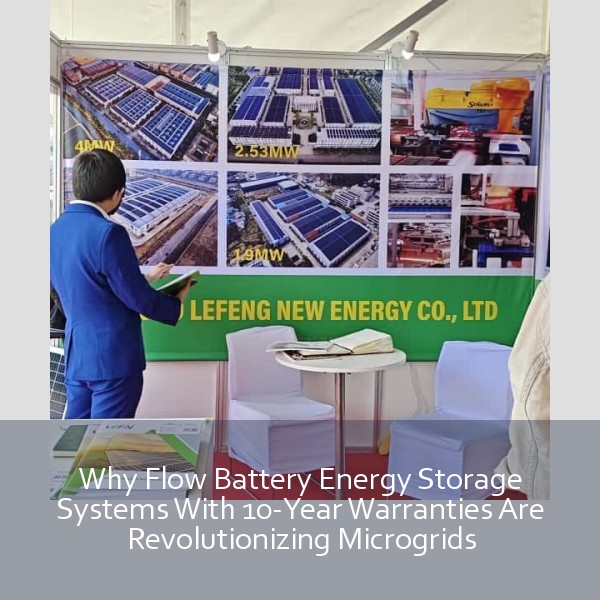
Why Flow Battery Energy Storage Systems With 10-Year Warranties Are Revolutionizing Microgrids
The New Power Player in Energy Storage
An energy storage system that works like a marathon runner rather than a sprinter, maintaining peak performance for 10+ years while handling the stop-and-go rhythms of renewable energy. That's exactly what modern flow battery systems bring to microgrids – and manufacturers are now backing this endurance with decade-long warranties. Let's break down why this tech is making utilities and energy managers sit up straighter than a lithium-ion battery at full charge.
Microgrids' Secret Sauce: Flexible Energy Management
Modern microgrids aren't your grandpa's backup generators. These smart systems juggle:
- Solar/wind power's unpredictable nature
- Industrial facilities' vampire-like energy appetites
- Emergency power needs during outages
Take the 75MW/300MWh vanadium flow battery system in Xinjiang – it's been smoothing out wind farm fluctuations like a seasoned DJ mixing tracks, maintaining grid stability through sandstorms and sudden demand spikes.
The Flow Battery Advantage: Built Like a Tank, Works Like a Swiss Watch
While lithium-ion batteries dominate headlines (and occasionally catch fire), flow batteries offer:
1. Decade-Proof Durability
Recent field data shows vanadium systems retaining 92% capacity after 15,000 cycles – that's like charging your phone three times daily for 13 years without degradation. No wonder manufacturers are offering 10-year warranties with straight faces.
2. Safety That Makes Fire Marshals Bored
Unlike their thermally excitable lithium cousins, flow batteries:
- Operate at ambient temperatures
- Use non-flammable electrolytes
- Can literally leak without causing meltdowns (literally)
Australia's Kununurra microgrid project chose vanadium flow specifically because bushfire risks made lithium a no-go – their engineers sleep better knowing the battery won't ignite during heatwaves.
Where Rubber Meets Road: Real-World Implementations
2025's game-changing projects prove this isn't lab-coat fantasy:
Case Study: The Desert Powerhouse
Inner Mongolia's hybrid microgrid combines:
- 87MW solar array
- 20MW wind farm
- 40MW/160MWh vanadium flow battery
Result? 94% renewable penetration with grid stability that makes traditional thermal plants look like dial-up internet in a fiber-optic world.
Innovation Spotlight: Self-Healing Electrolytes
New membrane-free designs from Chinese manufacturers are cutting costs faster than a Black Friday sale:
- 30% lower upfront costs vs 2022 models
- 5-minute capacity scaling via electrolyte swaps
- AI-driven SOC monitoring achieving 99.8% accuracy
The Economics That Make CFOs Smile
Let's talk turkey – flow batteries now hit $150/kWh for 10-hour systems when factoring in:
- 20,000+ cycle lifetimes
- Zero capacity fade
- Recyclable components
Yunnan's 500MW production facility slashed vanadium electrolyte costs by 40% in 2024 – proving this isn't just cleaner energy, but smarter capitalism.
Policy Tailwinds Turbocharging Adoption
China's 14th Five-Year Plan isn't messing around:
- 30% tax credits for flow battery projects
- Grid connection priority for flow-equipped microgrids
- R&D grants exceeding $200M annually
Meanwhile in California, microgrid operators using flow batteries get 15% higher REC values – because regulators know durability matters when the grid's on life support.
Future-Proofing Your Energy Strategy
As microgrids evolve from emergency backups to primary power sources, flow batteries are becoming the foundation stone of:
- Hydrogen production hubs
- EV charging mega-stations
- AI data center power islands
The writing's on the wall – or should we say, in the electrolyte tanks. With 10-year warranties becoming standard and costs in freefall, flow battery systems are no longer the future of microgrids... they're the here and now.
- Pre: Tesla Powerwall Lithium-ion Storage for Commercial Rooftop Solar in Australia
- Next: SimpliPhi ESS Flow Battery Storage: Powering Germany's Data Centers Sustainably
Related Contents
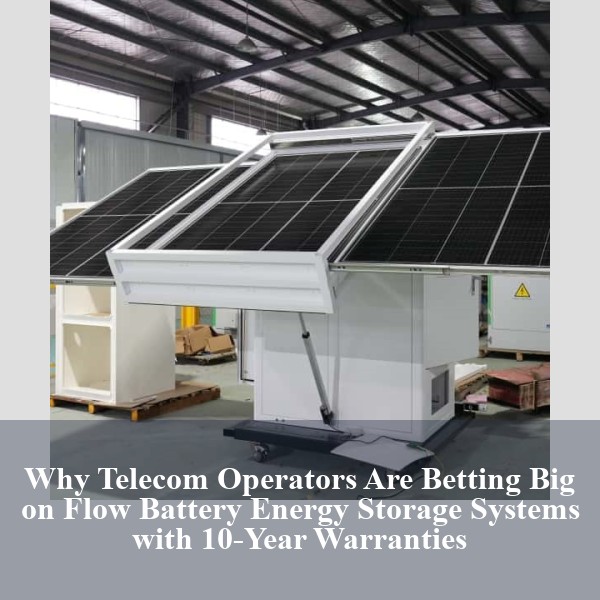
Why Telecom Operators Are Betting Big on Flow Battery Energy Storage Systems with 10-Year Warranties
most of us never think about the telecom towers keeping our Instagram feeds alive until we see that dreaded "no service" icon. But behind every bar of signal lies an energy challenge that would make even Elon Musk sweat. Enter the flow battery energy storage system with 10-year warranty, the silent hero turning the tide in mobile network reliability.